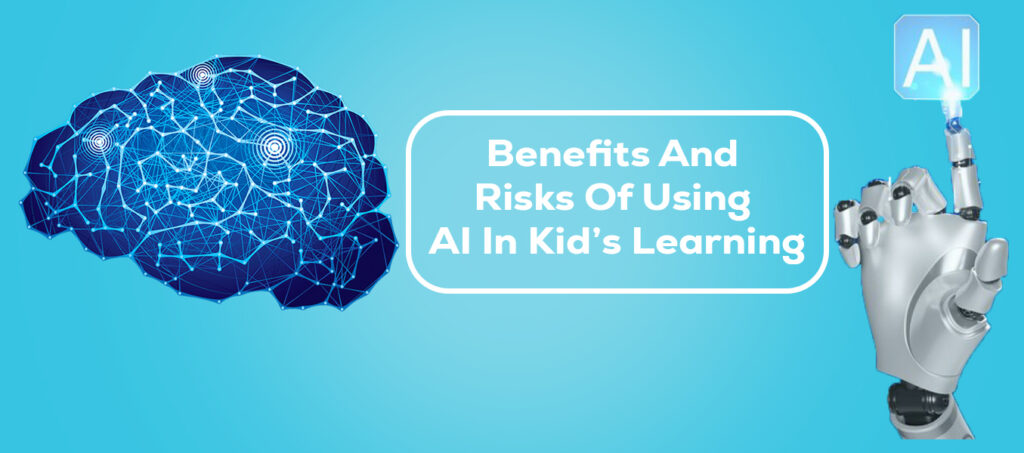
Incorporating artificial intelligence (AI) has emerged as a game-changer in the fast-changing educational scene, especially regarding children’s learning. AI applications are used in various educational contexts to personalize learning and increase engagement. However, As with any technological breakthrough, teaching young minds has advantages and disadvantages. In this blog, we’ll explore the benefits and potential drawbacks of adopting AI in kids’ learning.
Benefits of AI in Kids’ Learning:
1. Personalized Learning:
One of the biggest benefits of artificial intelligence in education is its capacity to offer individualized learning opportunities. AI-powered systems may assess a child’s learning styles, areas of strength, and weaknesses to create educational materials tailored to their needs. As children can advance at their rate with this individualized approach, it promotes personal growth and increases self-confidence.
2. Enhanced Engagement:
Traditional teaching methods often need help maintaining students’ attention. AI applications that improve engagement include interactive learning aids, gamification, and virtual reality experiences. By making learning enjoyable and interactive, AI helps create a positive and conducive environment for effective learning.
3. Data-Driven Insights:
AI can collect and analyze large amounts of information on a child’s learning path. Teachers and parents can gain useful information about a child’s development, areas of improvement, and learning preferences. This data-driven approach helps educators make informed decisions and build focused interventions to promote each child’s progress.
4. Accessibility and Inclusivity:
AI-powered educational technologies minimize challenges to effective education for students from different backgrounds. AI allows children to access learning materials anytime and anywhere, making learning more inclusive and equal.
5. Customized Content Creation:
AI can generate educational content, such as quizzes, exams, and lesson plans tailored to a student’s learning and academic achievement. This adaptability ensures that each child receives content suitable to their unique requirements.
AI’s Risks and Challenges in Children’s Learning:
1. Data Security and Privacy:
AI in education demands collecting enormous amounts of data from young students. Maintaining this sensitive information private and secure becomes a crucial concern. Schools and educational institutions must have strong data protection measures to protect children’s personal information from potential breaches.
2. Overreliance on Technology:
While AI has numerous benefits, an overreliance on technology may result in less face-to-face interaction between students and teachers. Maintaining a balance between AI-based learning and traditional teaching approaches is essential to encourage holistic growth.
3. Algorithmic Bias:
AI systems are only as reliable as the data on which they’ve been trained. If the data used in AI systems have biases, it may perpetuate current educational inequities. AI systems must be trained on various datasets to get around this.
4. Loss of Human Touch: Conclusion: Artificial intelligence has enormous potential to transform children’s learning by providing individualized experiences, increasing engagement, and enhancing accessibility. However, it is necessary to take action with caution when integrating AI into education, addressing the possible hazards related to data privacy, algorithmic bias, and dependency on technology.
We can establish a balanced and inclusive learning atmosphere that enables our kids for a brighter future by leveraging the potential of AI wisely and expanding it with conventional teaching methods.